WhatsApp: +255 767 570 005
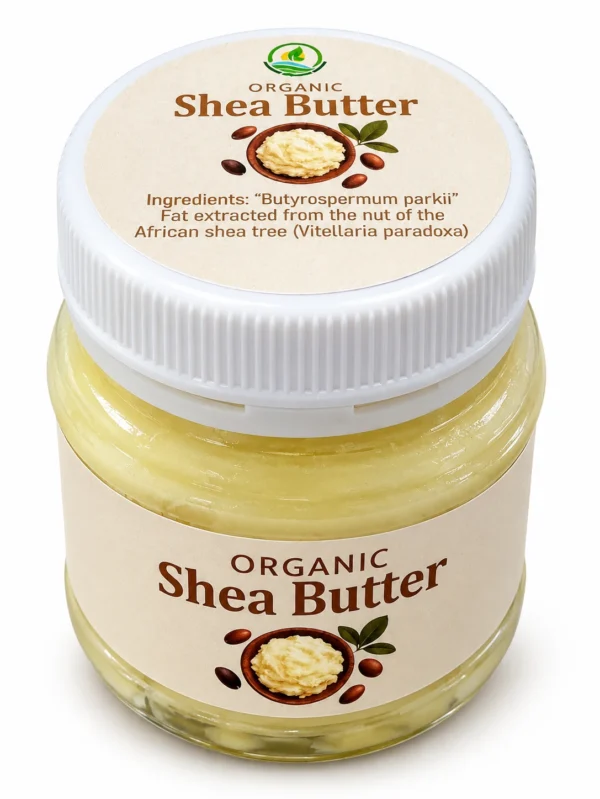
Organic Shea Butter
Sh 100
Organic Shea Butter is a rich natural emollient extracted from the nut of the African shea tree, Vitellaria paradoxa, traditionally used to moisturize, soften, and protect dry or rough skin.
Its high content of natural fatty acids makes it especially useful for dry skin, cracked areas, rough elbows and heels, skin-barrier support, and everyday body moisturization. Shea butter is best positioned as a natural skincare moisturizer, not as a cure for eczema, psoriasis, infections, scars, or other dermatological diseases.
Shea butter is a semi-solid plant fat obtained from the nuts of the African shea tree.
It has been used for generations across Africa as a traditional moisturizer for:
- Skin
- Lips
- Hands
- Feet
- Hair
- Scalp
The product shown lists Butyrospermum parkii, now commonly classified botanically as Vitellaria paradoxa, as its ingredient.
Shea butter works primarily as an emollient and occlusive moisturizer. This means it helps soften the outer layer of the skin while also reducing excessive water loss.
For people with dry, rough, or easily irritated skin, this can help the skin feel smoother, more flexible, and less tight.
Key Skin Benefits
- Deeply moisturizes dry skin
- Helps soften rough and flaky areas
- Supports the natural skin barrier
- Helps reduce moisture loss
- Supports smoother skin texture
- Helps soothe the feeling of dry, tight skin
- Suitable for hands, feet, elbows, knees, and body
- Can be used on dry lips
- May be useful as part of an eczema-prone skincare routine
- Can condition dry hair and scalp
Who May Consider This Product?
Organic Shea Butter may be suitable for people experiencing:
- Dry skin
- Rough skin
- Flaking
- Dry hands
- Cracked heels
- Dry elbows and knees
- Seasonal skin dryness
- Skin tightness after bathing
- Dry lips
- Dry hair or scalp
- Eczema-prone skin requiring additional moisturization
People with active skin infection, severe inflammation, open wounds, or unexplained persistent rashes should seek appropriate medical advice.
Understanding the Skin Barrier
The outermost layer of the skin is called the stratum corneum.
It helps:
- Keep water inside the skin
- Prevent excessive moisture loss
- Protect against environmental irritants
- Maintain healthy skin texture
When this barrier becomes damaged or depleted of natural oils, the skin may become:
- Dry
- Rough
- Flaky
- Itchy
- Tight
- More sensitive
Emollients such as shea butter help restore softness and reduce water loss from the outer skin.
Why Shea Butter Is Moisturizing
Shea butter contains naturally occurring fatty acids including:
- Oleic acid
- Stearic acid
- Linoleic acid
- Palmitic acid
These fats help coat and condition the skin.
They can fill small spaces between dry skin cells and create a protective layer that slows the evaporation of water.
This makes shea butter especially suitable for areas that become very dry or rough.
Shea Butter and Dry Skin
Dry skin, medically called xerosis, can be caused by:
- Hot showers
- Harsh soaps
- Cold or dry weather
- Ageing
- Frequent hand washing
- Air conditioning
- Certain medications
- Skin conditions such as eczema
Applying a rich emollient after bathing can help trap moisture within the skin.
For best results, shea butter can be applied while the skin is still slightly damp.
Shea Butter and Eczema-Prone Skin
Moisturizers are an important part of managing atopic dermatitis or eczema, because eczema is associated with a weakened skin barrier.
Shea butter may help:
- Reduce dryness
- Improve skin softness
- Support the barrier
- Reduce the feeling of tightness
However, shea butter does not cure eczema and should not replace prescribed treatments during active inflammatory flares.
People with significant redness, oozing, infection, or severe itching may require additional medical treatment.
Shea Butter and Psoriasis
People with psoriasis often experience thick, dry, scaly skin.
A rich moisturizer such as shea butter may help soften dry scales and make the skin feel more comfortable.
However, psoriasis is an immune-mediated condition.
Shea butter does not control the underlying immune inflammation and should not replace prescribed psoriasis treatment.
Shea Butter for Cracked Heels
Cracked heels often develop when thick, dry skin around the heel loses flexibility.
Regular use of a rich moisturizer may help:
- Soften hard skin
- Reduce dryness
- Improve flexibility
- Reduce further cracking
Apply shea butter to clean feet, especially before bedtime.
Wearing clean cotton socks afterward may help keep the moisturizer in contact with the skin.
Deep, painful, bleeding, or infected heel cracks require medical attention, especially in people with diabetes.
Shea Butter for Hands
Frequent washing, sanitizers, detergents, and environmental exposure can dry the hands.
Shea butter may be applied after washing to help restore moisture.
It can be especially useful:
- Before bed
- After repeated handwashing
- After household cleaning
- During dry weather
Shea Butter for Lips
A very small amount can be used externally on dry lips to help reduce moisture loss.
Avoid using the product if it causes irritation or if it contains ingredients other than pure shea butter that are not intended for lip use.
Shea Butter for Hair and Scalp
Shea butter may also be used as a hair-conditioning product.
It can help:
- Coat dry hair strands
- Reduce the feeling of dryness
- Add softness
- Condition dry ends
- Moisturize dry scalp areas
People with dandruff, scalp psoriasis, fungal infection, or persistent scalp irritation may require specific treatment rather than oil-based products alone.
Product Details
Product Name: Organic Shea Butter
Botanical Name: Vitellaria paradoxa
Traditional Ingredient Name: Butyrospermum parkii
Product Type: Natural Skin Emollient
Form: Semi-Solid Butter
Category: Natural Skincare and Personal Care
Primary Focus: Dry skin, moisture retention and skin-barrier support
Ingredient: Shea Butter, subject to confirmation from the complete product label
How to Use on the Body
- Take a small amount of shea butter.
- Warm it gently between the palms.
- Massage into clean skin.
- Focus on dry or rough areas.
- Reapply whenever needed.
For best moisturization, apply after bathing while the skin is still slightly damp.
How to Use on Very Dry Areas
For elbows, knees, heels, and hands:
- Apply a thicker layer in the evening.
- Massage gently.
- Leave on overnight.
For feet, clean socks may be worn after application.
Important Skincare Advice
Shea butter is usually well tolerated, but all skincare products can potentially cause sensitivity.
Consider a small patch test before widespread use if you have very sensitive skin.
Stop using the product if you develop:
- Persistent redness
- Burning
- Swelling
- Rash
- Significant itching
- Worsening irritation
Acne-Prone Skin
Shea butter is rich and occlusive.
Some people with acne-prone facial skin may find heavy butters too greasy.
If you are prone to:
- Facial acne
- Folliculitis
- Clogged pores
consider testing a small amount before applying it regularly to the face.
It may be better suited to dry body areas than oily facial skin in some individuals.
Shea Butter and Stretch Marks
Shea butter can help moisturize and improve the softness of skin.
However, there is not strong evidence that shea butter can prevent or permanently remove stretch marks.
Stretch marks develop within deeper layers of the skin and often fade naturally over time.
For website wording, it is safer to say:
Helps moisturize and maintain supple skin
rather than claiming that it removes stretch marks.
Shea Butter and Scars
Shea butter can moisturize mature scar tissue and surrounding dry skin.
It should not be presented as a proven scar-removal treatment.
Fresh surgical wounds or open injuries should only be treated according to professional wound-care advice.
Shea Butter and Skin Lightening
Pure shea butter does not medically bleach or lighten the skin.
Its moisturizing effect can make dry, dull skin appear healthier and smoother, but it should not be advertised as a skin-whitening treatment.
Open Wounds and Infections
Do not use ordinary cosmetic shea butter as a substitute for wound treatment.
Avoid applying it directly to:
- Deep wounds
- Infected cuts
- Burns requiring medical attention
- Oozing skin lesions
These conditions may require sterile wound care or prescribed medication.
Storage Instructions
- Store in a cool, dry place.
- Keep away from direct sunlight and excessive heat.
- Keep the container tightly closed.
- Always use clean, dry hands or utensils.
- Protect from contamination.
- Keep out of reach of children.
- Follow the expiry date printed on the packaging.
Shea butter naturally softens at warmer temperatures and becomes firmer in cooler environments. This change in texture does not necessarily indicate spoilage.
Why Choose Organic Shea Butter?
Organic Shea Butter offers a simple, traditional approach to deep moisturization and skin-barrier support.
Its naturally rich texture makes it particularly useful for people with dry, rough, or dehydrated skin.
At Alchemy Organic Pharmacy, we recommend positioning shea butter primarily as a:
Natural moisturizer for dry skin, rough areas, skin softness, and everyday body care.
Related products
-
Seamoss Body Butter
Sh 100 -
Shilajit Essential Extract
Sh 100
Reviews
There are no reviews yet.